如何缩短《Chinese Optics Letters》杂志的审稿周期?
来源:优发表网整理 2026-05-07 15:39:01 11082人看过
想要缩短《Chinese Optics Letters》杂志的审稿周期需要作者、编辑部和审稿人等多方面的共同努力,作者可以采取一些有效措施,间接地加快审稿进度,提升稿件的处理效率。
建议如下:
一、提高论文质量
(1)严格遵循投稿要求:在投稿前,仔细阅读《Chinese Optics Letters》杂志的投稿指南,包括格式要求、字数限制、参考文献格式等。确保稿件符合杂志的规范,避免因格式问题被退回修改,从而耽误时间。
(2)提高论文质量:确保论文的研究内容具有创新性和学术价值,数据准确,论证严谨,语言表达清晰流畅。高质量的稿件更容易通过初审,进入同行评审阶段。
二、选择合适的投稿时机
(1)关注期刊审稿周期:在投稿前,了解《Chinese Optics Letters》杂志的审稿周期(预计1-3个月)和发表周期(月刊),以便合理安排投稿时间。
(2)关注期刊动态:了解期刊的专题征稿或热点话题,针对性地投稿,可能获得优先处理。
三、与编辑部保持良好沟通
(1)主动了解审稿进度:如果超过预计的审稿时间仍未收到回复,可以礼貌地向编辑部发送邮件,询问稿件的审稿进度。
(2)尊重审稿意见:认真对待审稿意见,积极修改论文中的不足之处,共同探讨论文的改进方向。
需要注意的是,缩短审稿周期的前提是保证稿件的质量,不能为了追求速度而牺牲学术严谨性。
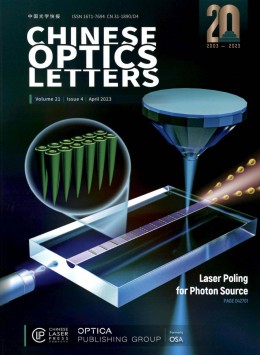
《Chinese Optics Letters》杂志创刊于2003年,是由中国科学院主管、中国科学院上海光学精密机械研究所;中国光学学会主办的学术理论月刊。国内刊号CN:31-1890/O4,国际刊号ISSN:1671-7694。该杂志以推动科学改革与发展、探索科学规律为宗旨,致力于为科学工作者、研究者和管理者提供一个学术交流的平台。
《Chinese Optics Letters》杂志投稿建议:
1. Title
The title should be concise but informative. Avoid beginning with an article or a preposition. The words "new" or "novel" should be avoided in the title and the text for legal reasons. Titles may be edited by the publisher to facilitate computer search.
2. Author names and Affiliations
Author names should be given in full and consistent form to facilitate indexing. Affiliations and postal addresses for all authors should appear on the title page.
3. Abstract
The abstract should be no longer than 100 words. It should be informative, without descriptive words or citations, and contain the major conclusions and quantitative results or other significant items in the paper. Together with the title, the abstract must be adequate as an index to all the subjects treated in the paper, and will be used as a base for indexing.
4. OCIS Codes
OCIS codes should be provided to help with indexing. This set of codes was formulated by the Optical Society of America and well-known in the optical research world. OCIS codes are available on Chinese Optics Letters’ web page and the OSA publication web pages. Each manuscript must be given 2-4 OCIS codes below the abstract, and the principal index code should be placed first.
5. Equations
Equations should be punctuated and aligned to bring out their structure, and numbered consecutively in round brackets on the right-hand side of the page.
Notation. Notation must be legible, clear, compact, and consistent with standard usage. In general, acronyms should be defined at first use.
Variables and Vectors. Set single-letter variables in italics (Eg. M). Set vectors in boldface (Eg. m). Functions, derivative "d," abbreviations, and multi-letter identifiers should be set in roman (plain) type (Eg. α, cos, ∫...dx).
Fences. For simple bracketing the usual order of parentheses and brackets is { [ ( { [ ( ) ] } ) ] }.
Bit and Byte. The standard abbreviations for bit and byte are b and B, respectively. To avoid confusion, these units should be spelled out in most cases (1 bit, 20 GB). Display equations should be broken and aligned for two-column display unless spanning across two columns is essential. Equations should be centered with equation numbers set flush right. For Math Type math, use the Format Equations feature to format all equations as Times + Symbol 10. Note: There must be a blank line space above and below each displayed equation.
6. References
References should be numbered consecutively in the order in which they are first referenced in the body of the manuscript. Two references [2,3] should be included together, separated by a comma, and three or more consecutive references should be indicated by the bounding numbers and an en dash [1-4]. When compiling your references, be sure to include the titles of articles. COL requires this information before a paper can be sent to peer review. The reference titles will subsequently be removed by copy editors before they are published, so this information is not included in the length estimate sent to authors when a positive decision is made by the editor. All reference authors should be included in the reference list but when reference authors are mentioned in the text, use surnames only (unless further clarity is needed), and use "et al." and first author name when three or more authors are given. The format of references is as follows:
Journal paper
1. Q. Ji, X. Ma, J. Sun, H. Zhang, and Y. Yao, "Novel method for measurement of effective cavity length of DBR fiber", Chin. Opt. Lett. 8, 398 (2010).
Book
2. N. Bloembergen, Nonlinear Optics (Springer, 1965).
Paper in published conference proceedings
3. R. E. Kalman, "Algebraic aspects of the generalized inverse of a rectangular matrix", in Proceedings of Advanced Seminar on Generalized Inverse and Applications 111 (1976).
SPIE proceedings
4. S. K. Griebel, M. Richardson, K. E. Devenport, and H. S. Hinton, "Experimental performance of an ATM-based buffered hyperplane CMOSSEED smart pixel array", Proc. SPIE 3005, 254 (1997).
Paper accepted for publication
5. H. Qi, M. Zhu, W. Zhang, K. Yi, H. He, and J. Shao, “Dependence of wavefront errors on the nonuniformity of thin film", Chin. Opt. Lett. (to be published).
Internet links
6. A. G. Ramm, H. Wang, and J. Ye, "Invisible obstacles", www.arxiv.org/abs/math-ph/0608034 (June 1, 2011).
Patent
7. K. Zhang, J. Zhang, R. Wang, R. Guo, J. Wang, and K. Peng, “All solid state single frequency and frequency-doubled laser” (in Chinese) Chinese Patent ZL98125474.8 (2000).
7. Figures and Tables
Figures should be suitable (resolution above 300 dpi) for immediate reproduction and embedded in the text. They should be set as one column wide (6-8 cm) if possible unless two-column display is essential. In the figures, the main lines should be about 0.3 mm in width, and the assistant lines 0.15 mm. Notations in the figures should be distinct and consistent with the same ones in the text, and their font size will be 7-9 pt. Figures should also be uploaded as separate figure files. Each figure should have its own caption. Color Art is Online Only, and free to authors.
Tables must be numbered in order of appearance and identified with appropriate titles. The table title, which should be brief, goes above the table. Note that tables are usually typeset, not scanned (tables cannot be electronically reduced in size). Tables should be set in one column wide if possible and be placed near their first mention in the body.
8. Article Length and Proof
Note that Chinese Optics Letters has a limit of five printed pages. If a paper exceeds this limit, it must be shortened before the paper is accepted. If the page proof is over the five-page limit, the proof must be shortened before the paper can be assigned to a final issue. Authors should use the COL Word or LaTeX templates to prepare manuscripts to facilitate length checking.
声明:以上内容来源于互联网公开资料,如有不准确之处,请联系我们进行修改。